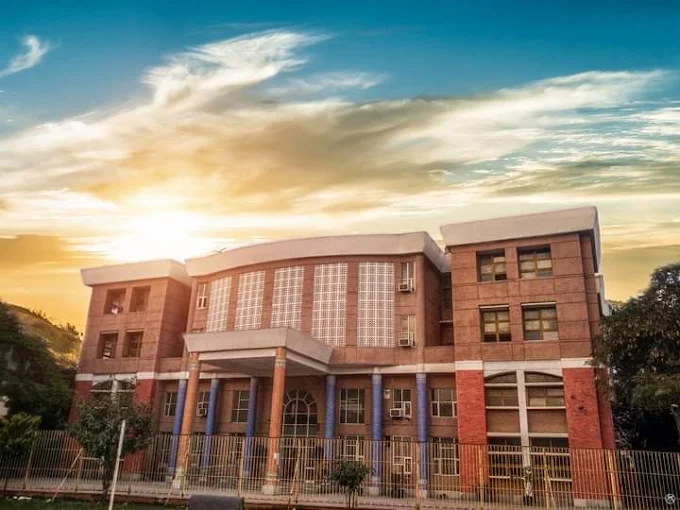
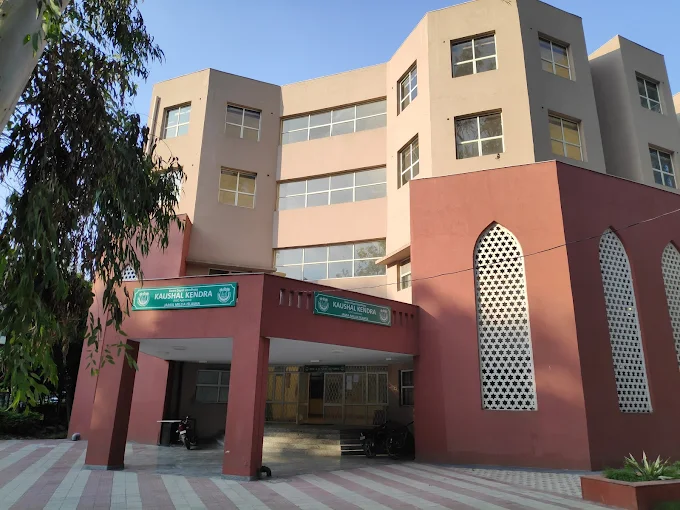
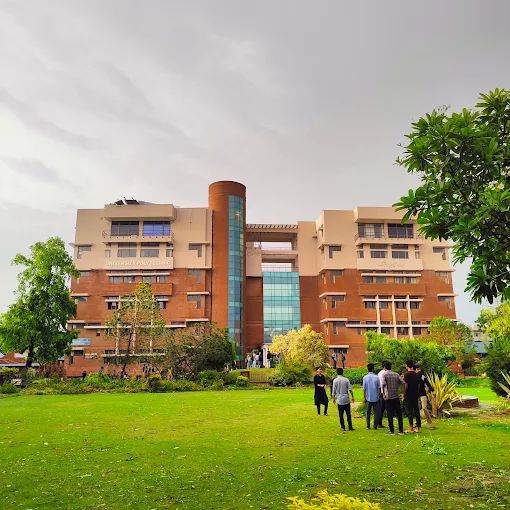
Overview
Jamia Millia Islamia was established in 1920 in Aligarh, United Provinces, India, and became a Central University through an act of the Indian Parliament in 1988. The name itself reflects its purpose: "Jamia" means university and "Millia" means national in Urdu. Its evolution from a modest institution in pre-independence India to a central university in New Delhi offering education from nursery to advanced research is a testament to the dedication and vision of its founders. Sarojini Naidu once remarked that Jamia was built “stone by stone and sacrifice by sacrifice.”
The university was born out of a unique blend of anti-colonial Islamic activism and the pro-independence aspirations of western-educated Indian Muslim intellectuals. These forces converged in 1920, with Mahatma Gandhi playing a pivotal role. The Khilafat movement and the Indian National Congress’s non-cooperation movement provided the momentum for establishing Jamia Millia Islamia. Rabindranath Tagore described it as one of India’s most progressive educational institutions.
Jamia faced immediate challenges. It actively supported the Bardoli resolution and sent volunteers to promote the freedom movement. The British government responded by imprisoning many of its teachers and students. The end of the non-cooperation movement in 1922 and the dissolution of the Khilafat in 1924 left Jamia in crisis. Financial support ceased, and many prominent supporters withdrew, threatening the institution’s survival.
In 1925, Hakim Ajmal Khan, Dr. Mukhtar Ahmed Ansari, and Abdul Majeed Khwaja, with Gandhi’s support, relocated Jamia to Karol Bagh, New Delhi. Gandhi’s encouragement and promise to raise funds personally helped sustain morale. Despite opposition from orthodox Muslims and financial constraints, Hakim Ajmal Khan funded Jamia from his own resources, while Ansari and Khwaja traveled extensively to raise support.
A significant turning point came in 1926 when three scholars—Dr. Zakir Husain, Dr. Abid Husain, and Mohammad Mujeeb—returned from Germany to serve Jamia. Their commitment was evident in their voluntary salary reductions. They introduced evening classes for adult education, which later evolved into the Idara-i-Taleem-o-Taraqqi in 1938. This initiative became so popular that new rooms had to be built to accommodate students.
The death of Hakim Ajmal Khan in 1928 triggered another financial crisis. Dr. Zakir Husain, who became Vice Chancellor in 1926, led efforts to stabilize Jamia. A group of young teachers pledged to serve Jamia for twenty years on modest salaries, forming the Life Members group. This pledge was repeated in 1942 by another group of teachers. Jamia’s printing and publication department was reorganized into Jamia Press, Urdu Academy, and Maktaba Jamia.
In 1935, the foundation stone for a new school building was laid in Okhla, a remote village near Delhi. By 1936, most of Jamia’s institutions had moved to this new campus. The emphasis on innovative education led to the establishment of a teacher’s college in 1938. Jamia was registered as a society in 1939. Its reputation attracted international visitors and collaborators, including Ms. Gerda Philipsborn from Germany, who served Jamia for many years.
In 1939, Maulana Ubaidullah Sindhi established Baitul Hikmah, a school of Islamic Studies, at Jamia. Dr. Zakir Husain later recalled those challenging yet hopeful times as “days of joy.” During Jamia’s silver jubilee in 1946, leaders from both sides of India’s political divide shared the stage, reflecting the tensions that would culminate in partition. Despite the communal violence of 1947, Jamia’s campus remained peaceful, though Maktaba Jamia suffered significant losses due to arson.
After independence, Jamia continued to grow. It became a destination for visiting dignitaries such as Marshal Tito, King Zahir Shah, Crown Prince Faisal, and King Reza Shah Pehlavi. Following Abdul Majeed Khwaja’s death in 1962, Dr. Zakir Husain, then Vice President of India, became Jamia’s Chancellor in 1963.
In 1962, the University Grants Commission declared Jamia a ‘deemed to be University.’ This led to the establishment of the School of Social Work in 1967 and the Zakir Husain Institute of Islamic Studies in 1971. Engineering programs began in 1978, followed by the creation of faculties in Humanities, Natural Sciences, Social Sciences, and the State Resource Centre in 1981. The Mass Communication Research Centre and the Centre for Coaching and Career Planning were launched in 1983, followed by the Faculty of Engineering & Technology and the University Computer Centre in 1985. The Academic Staff College and the Academy of Third World Studies were added in 1987 and 1988.
Jamia Millia Islamia was granted Central University status in December 1988. The Faculty of Law was added in 1989, and numerous undergraduate and postgraduate programs have since been introduced. Today, Jamia comprises nine faculties and several research centers, including the AJK-Mass Communication Research Centre and the Academy of International Studies. It continues to advance in the field of Information Technology, offering a range of IT courses and maintaining a campus-wide network that connects its departments and offices.
Highlights
| College Name | Jamia Millia Islamia University(JMI), New Delhi |
| Approved by | AICTE, UGC |
| Establishment Year | 1920 |
| Ownership | Private |
| Gender Accepted | CO-ED |
| Address | Maulana Mohammad Ali Jauhar Marg, Jamia Nagar India, New Delhi - 110025, Delhi |
| Contact No.: | View Contact No. |
